🈵 Japanese “no Vacancy” Button emoji meaning
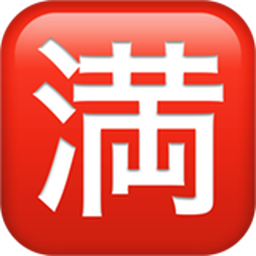
🈵 means "full" or "no vacancy", used to say a place, event or schedule is completely booked or sold out. People also use it jokingly to say their stomach is full. The Apple artwork shows a red rounded square with the white Japanese character 満.
U+1F235
Download size


Similar emojis


More emojis: Symbols


As a Coupang Partners affiliate, this site earns a commission from qualifying purchases.
What 🈵 means
The character 満 (man) means "full" in Japanese and appears on signs at hotels, parking lots and restaurants. In chats it is a neutral, slightly playful way to say there is no space left, a class is full, tickets are gone, or you cannot fit anything else into your day or your plate.
🈵 How people use it
- Saying a hotel, event or class is sold out
- Telling friends your calendar has no free slots
- Joking that you are too full to eat more
- Announcing that a group or team has no spots left
Example messages
Sorry guys, workshop is 🈵 for this month
No more biryani for me, I'm 🈵
Weekend schedule 🈵 already 😩
All tickets gone 🈵 see you at the next show
Common 🈵 combinations
- 🈵🙅Sorry, fully booked, no more room
- 🍜🈵Ate too much, completely full
🈵 vs similar emojis
| 🈵 vs 🈳 | 🈳 means "vacancy" or empty, the opposite of 🈵. |
|---|---|
| 🈵 vs 🈚 | 🈚 means "free of charge" or "nothing", not full. |
Emoji details
| Name | Japanese “no vacancy” button |
|---|---|
| Codepoints | U+1F235 |
| Category | Symbols |
| Keywords | button, ideograph, japanese, no, vacancy |
How to use
Search
Find emojis by name or keyword (e.g. "smile", "heart", "fire").
Sizes
32, 64, 128, 256 and 512px transparent PNGs. Get all five in one ZIP.
Skin tones and genders
People emojis include five skin tones and gender variants as separate images.
Usage
Apple emoji artwork is Apple's property. Use for personal or non-commercial purposes; check Apple's policy for commercial use.
FAQ
What does the 🈵 Japanese “no vacancy” button emoji mean?
🈵 means "full" or "no vacancy", used to say a place, event or schedule is completely booked or sold out. People also use it jokingly to say their stomach is full. The Apple artwork shows a red rounded square with the white Japanese character 満.
What is the opposite of 🈵?
The opposite is 🈳, the Japanese "vacancy" button, which means empty or available. Hotels and parking lots in Japan use the two signs to show whether space is free.
How do you read the character on 🈵?
It is 満, read "man" in Japanese, meaning full or filled. Chinese writes the same word as 滿 or 满, with the same meaning.
Are the backgrounds transparent?
Yes, every PNG has a transparent background.