🈶 Japanese “not Free of Charge” Button emoji meaning
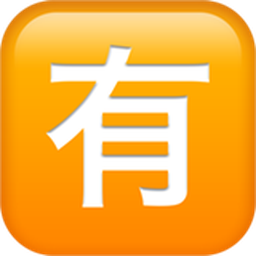
🈶 is a Japanese sign meaning "not free of charge", so it marks something as paid or having a fee. The character 有 means "have" or "exist". Apple shows it in white on a rounded orange square button.
U+1F236
Download size


Similar emojis


More emojis: Symbols


As a Coupang Partners affiliate, this site earns a commission from qualifying purchases.
What 🈶 means
In Japan, 有 appears in words like 有料 (yūryō), meaning paid or with a charge, which is why the emoji is used for paid services, entry fees or paid parking. It is the opposite of 🈚, which means free. Because 有 also means "have" in Chinese, some Chinese-speaking users send it to say "have" or "there is".
🈶 How people use it
- Marking something as paid, not free
- Talking about Japan trips and signs
- Saying "have" in Chinese chats
- Labeling paid content or services
Example messages
Parking there is 🈶, around 500 yen
Is the museum free? Nope 🈶
Stickers are 🈶 now, sadly
Ticket prices 🈶💴
Common 🈶 combinations
- 🈶💴Something costs money or has a fee
🈶 vs similar emojis
| 🈶 vs 🈚 | 🈚 uses 無 and means free of charge, the opposite of 🈶. |
|---|---|
| 🈶 vs 🈷️ | 🈷️ uses 月 and means monthly amount, not simply paid. |
| 🈶 vs 🈸 | 🈸 uses 申 and means application, with no link to price. |
Emoji details
| Name | Japanese “not free of charge” button |
|---|---|
| Codepoints | U+1F236 |
| Category | Symbols |
| Keywords | button, charge, free, ideograph, japanese, not |
How to use
Search
Find emojis by name or keyword (e.g. "smile", "heart", "fire").
Sizes
32, 64, 128, 256 and 512px transparent PNGs. Get all five in one ZIP.
Skin tones and genders
People emojis include five skin tones and gender variants as separate images.
Usage
Apple emoji artwork is Apple's property. Use for personal or non-commercial purposes; check Apple's policy for commercial use.
FAQ
What does the 🈶 Japanese “not free of charge” button emoji mean?
🈶 is a Japanese sign meaning "not free of charge", so it marks something as paid or having a fee. The character 有 means "have" or "exist". Apple shows it in white on a rounded orange square button.
How do you pronounce the character in 🈶?
In Japanese, 有 is read as yū or u, as in 有料 (yūryō). In Mandarin Chinese it is pronounced yǒu.
What is the opposite of 🈶?
The opposite is 🈚, which means free of charge.
What does 🈶 mean in Chinese chats?
It usually stands in for the word 有, so it can replace "have" or "there is" inside a sentence. It is often paired with 🈚, read as 无, for "don't have".
Are the backgrounds transparent?
Yes, every PNG has a transparent background.